Is Using a Jumble Solver Cheating? A Fair-Play Guide
People often ask, “Is using a jumble solver cheating?” The answer depends on how and where you use it. Solving the Daily Jumble alone is your choice, while using outside help against a friend may break your agreed rules. Scrabble and Words With Friends matches can have different expectations, especially in competitive play. This guide explains those differences and shows how to use a solver without taking the fun or fairness out of the game.
Is Using a Jumble Solver Cheating? The Short Answer
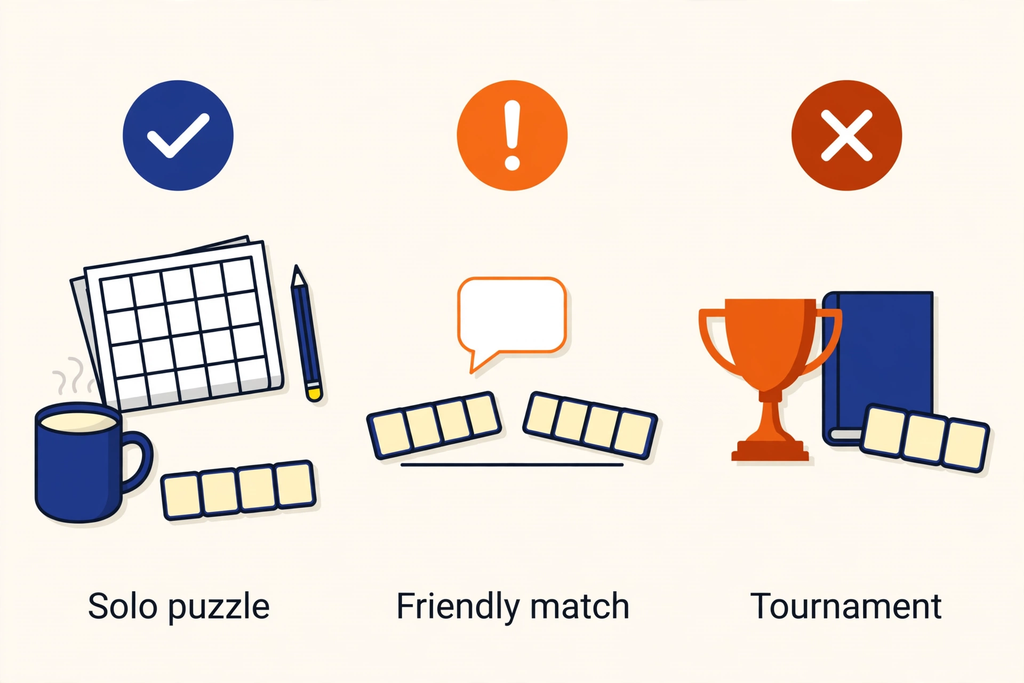
Three Situations That Change the Answer
| Where you’re playing | Is a solver OK? | Who decides? |
| Solo puzzle | Yes, it’s your choice | You |
| Friendly match | If everyone agrees | House rules |
| Tournament | Outside help is prohibited during play | Official rules |
When you’re solving alone, there’s no opponent to disadvantage. In a friendly match, both players should agree on whether outside help is allowed. Competitive games follow their own rules.
New to these puzzles? Read our Jumble Puzzle Guide to learn how scrambled letters and clues work before trying the next challenge.
What a Jumble Solver Actually Does
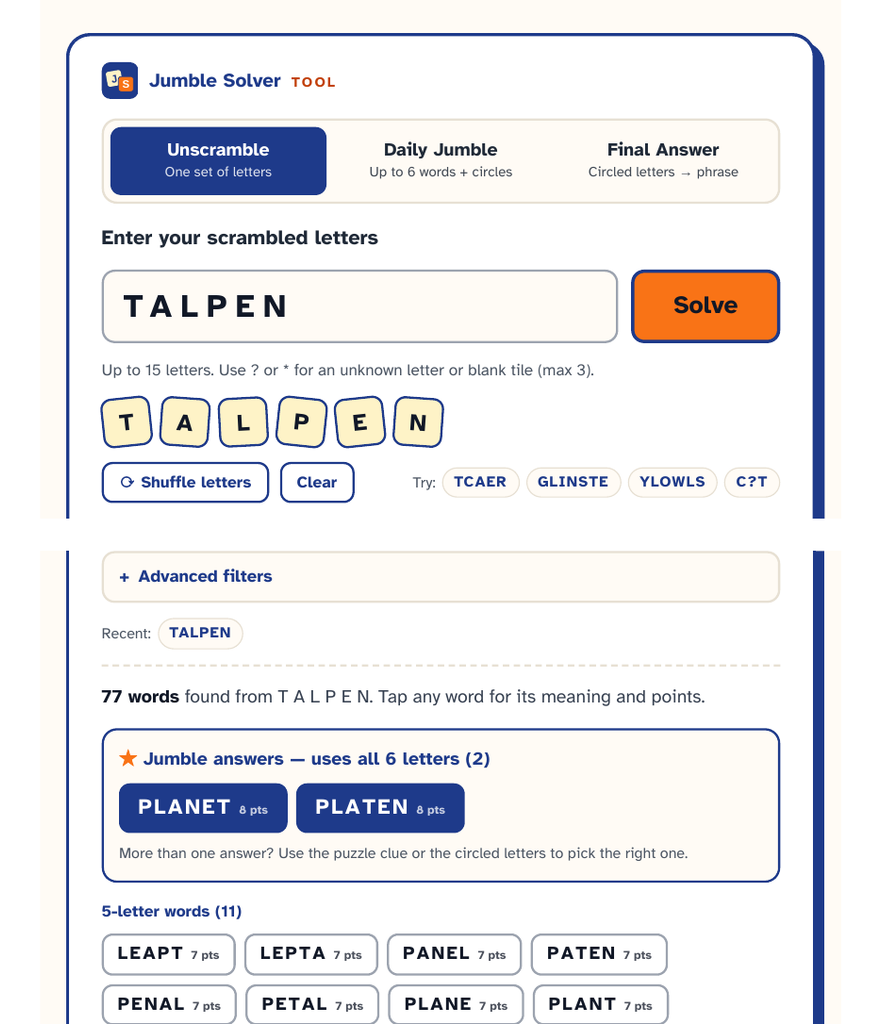
A Jumble Solver rearranges scrambled letters and checks possible words against a word list. Some tools also support a wildcard, such as ? or *, to represent an unknown letter or blank tile.
Similar tools serve slightly different purposes:
- Jumble Solver: Helps solve scrambled-word puzzles.
- Word Finder: Finds playable words from available letters, often with score filters.
- Anagram Solver: Rearranges the same letters to create different words or phrases.
For example, enter C?T into the solver and use the question mark for the missing letter. The results can include CAT, COT, and CUT. You can also enter a complete scrambled set and narrow the results by word length. This makes it easier to check possible answers without trying every letter combination yourself.
In a quick hands-on check, I tried the solver with regular scrambled letters, a missing-letter wildcard, and a word-length filter. The wildcard allowed me to use ? for an unknown letter, while the length filter helped narrow the results to words matching the selected number of letters. These features make it easier to explore possible answers without checking every combination manually. Still, the puzzle clue or game dictionary determines which word actually fits.
So, is using a word finder cheating or is using an anagram solver cheating? It depends on the same rules: where you’re playing and whether outside help is allowed. Typing letters into a website is different from using software that reads your game screen, connects to the game, or makes moves automatically. The latter can violate a game’s rules.
Is Using a Jumble Solver Cheating on the Daily Jumble?
Solo Puzzles vs. Competitive Games
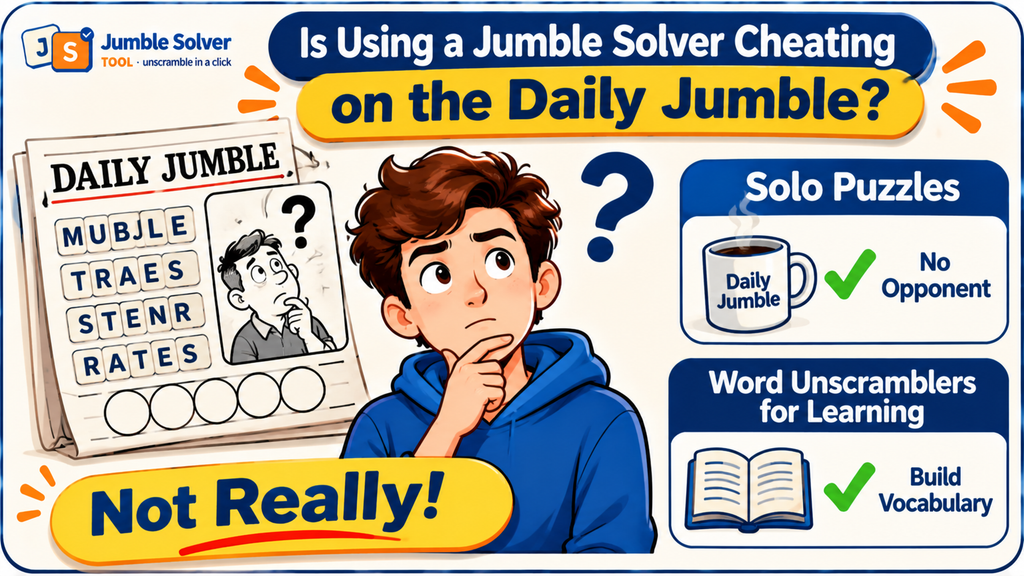
The Daily Jumble is a newspaper puzzle where you unscramble four words, use their circled letters, and solve a cartoon riddle, usually built around a pun. Since you’re playing alone, there’s no opponent to disadvantage. So, is a jumble solver cheating for the daily jumble? Not really. It’s your choice.
For more enjoyment, try solving each word yourself before looking for help. If you get stuck, check one answer and work out the remaining letters and cartoon riddle on your own. That way, you still get the satisfaction of solving the puzzle. For instance, if a scrambled word has you stuck, use the solver to check that one answer rather than immediately revealing the entire puzzle. You can still work out the circled letters and solve the cartoon riddle yourself.
Word Unscramblers for Learning
So, is word unscrambler cheating when you’re using it to learn? No. Checking unfamiliar words can help you notice letter patterns, common endings, and unusual combinations. Reviewing those answers also supports vocabulary building, making the next puzzle easier without relying on a solver.
Is It Cheating to Use a Word Finder in Words With Friends?
Casual Games, House Rules, and Fair Play
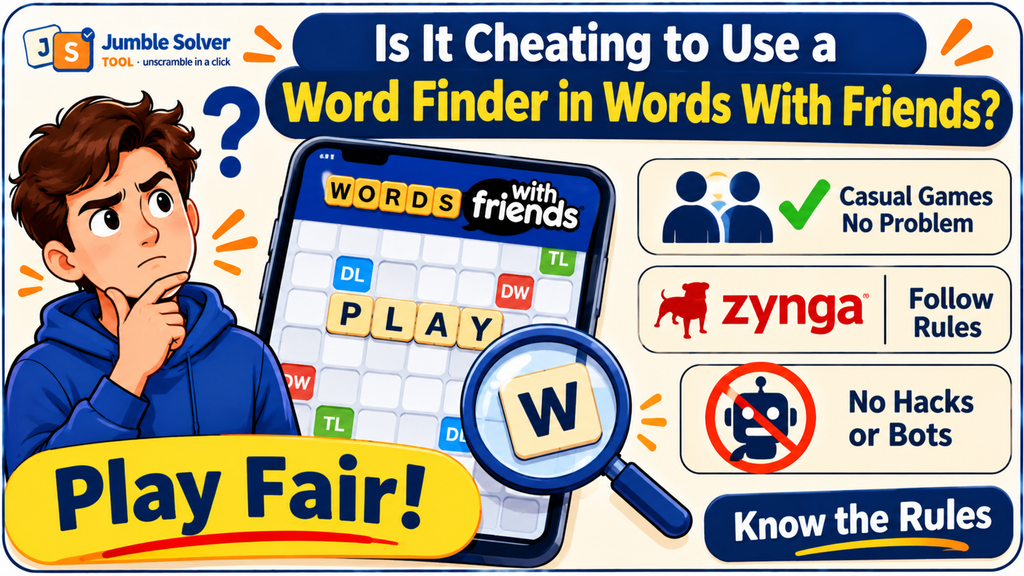
Is it cheating to use a word finder in Words With Friends? It depends on the agreement between players. If both friends allow outside help, there’s no hidden advantage. But secretly checking words gives one player an edge the other hasn’t agreed to. In random matches, it’s safer to play without outside solvers. Your opponent hasn’t agreed to those extra rules.
Official Rules, In-Game Hints, and Account Risks
Words With Friends, developed by Zynga (part of Take-Two Interactive), offers built-in Powerups. Word Radar highlights possible word placements, while Hindsight shows the best word you could have played after a move. These are official game features, unlike unauthorized software.
Zynga’s Community Rules prohibit unauthorized software that interferes with its games or collects information from its services. So, can you get banned for cheating in words with friends? Yes. Zynga warns that using cheat programs, bots, or hacks can lead to account suspension or bans. A manual lookup on an independent website, however, isn’t automatically the same as using a game-interacting cheat app.
What If You Suspect Your Opponent Is Using a Solver?
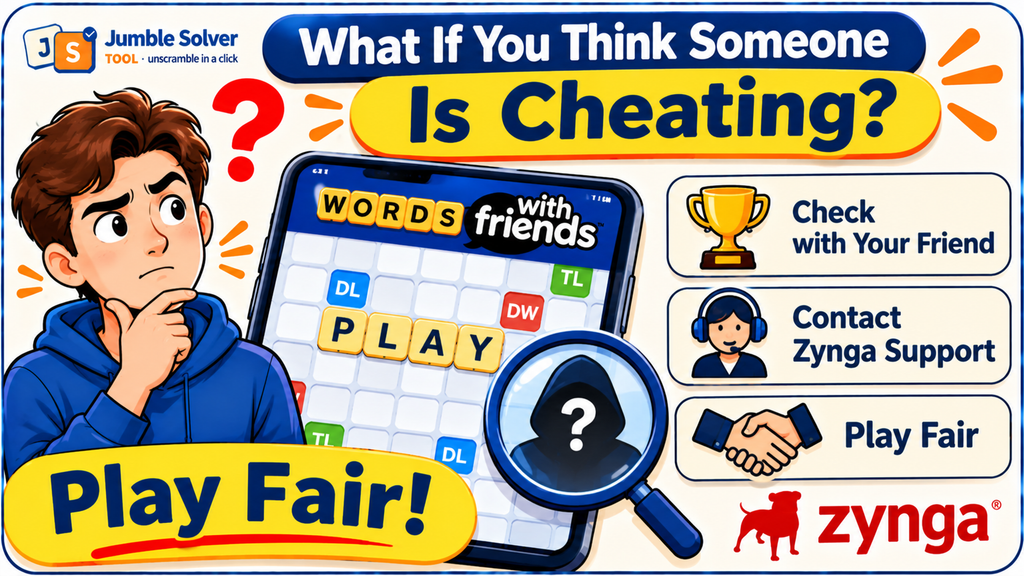
How to tell if someone is cheating in words with friends? You usually can’t know from a high score or an unusual word alone. Strong players study word lists, too. If you’re concerned, discuss the rules with your opponent or report suspected violations through Zynga Support.
Is Using a Scrabble Word Finder Cheating?
Casual Scrabble vs. Official Tournaments
At home, Scrabble players can set their own rules. Some families allow word finders, especially when playing with younger players. The important thing is that everyone agrees before the game starts. Mobile games such as Scrabble GO have their own rules. Is cheating allowed in Scrabble GO? Secretly using outside help against another player isn’t fair, even if the game doesn’t detect it.
What NASPA Tournament Rules Say
In the US and Canada, the North American Scrabble Players Association (NASPA) oversees sanctioned competitive play. Its Code of Conduct defines cheating as knowingly breaking rules to gain an advantage. Tournament rules also restrict electronic devices during play, except for permitted adjudication.
So, are word finders allowed in Scrabble tournaments? No, not for finding moves during a game. The same principle applies to Jumble puzzles: competition rules matter. Outside North America, WESPA sets international tournament rules and also prohibits looking up words to find moves during play.
Scrabble Dictionaries and Word Lists
North American tournaments use the NASPA Word List (NWL2023), while many international events use Collins Scrabble Words (CSW). They aren’t interchangeable. Players can still check disputed words through an approved Word Judge, such as Zyzzyva, under the event’s adjudication rules. That’s different from searching for a better move.
Using a Jumble Solver Fairly: When Does Help Become Cheating?
The Opponent-Consent Test
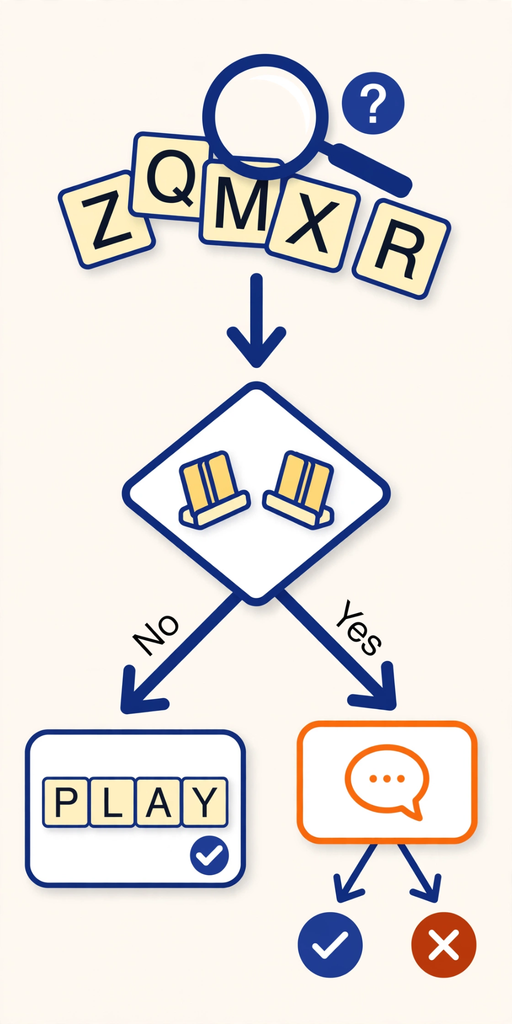
To decide whether using a Jumble Solver is cheating, ask yourself: Would your opponent agree to it if they knew? In a solo puzzle, that’s your choice. In a friendly match, both players should agree. In a tournament, follow the official rules.
Quick decision guide:
- Playing alone? Use a solver if you want.
- Both players agree? Outside help is fine if the rules allow it.
- Your opponent doesn’t know? Don’t use it secretly.
- Playing in a tournament? Follow its rules.
How to Use a Jumble Solver Without Cheating
Here’s how to use a word finder without cheating while still improving your skills:
- Try finding the words yourself first.
- Use the solver after the game or when permitted.
- Compare its results with your answers.
- Add unfamiliar words to a study list.
- Practice again without help to build vocabulary.
The solver can help you review possible words after a puzzle or game. Enter your letters, compare the results with your answers, and keep track of unfamiliar words for your next practice session.
Practice with our free Jumble Solver.
Set Simple House Rules Before Playing
Agree on the rules before starting. Here’s a simple template:
Our game rules: No outside word finders during turns. In-game hints are allowed / not allowed. Solvers can be used after the game for review. Both players can agree to a learning game where outside help is permitted.
What If You Think Someone Is Cheating?
Signs, Evidence, and Fair Responses
A high score or an unusual word doesn’t automatically mean someone is cheating. Experienced Words With Friends players often know words that others haven’t seen before. So, is using a jumble solver cheating if your friend openly admits to it? Not necessarily. What matters is whether both players agreed to those rules.
If something feels unfair, talk to your opponent first. For suspected violations of the Zynga Community Rules, use the game’s official support channel. If you prefer relaxed matches, play with friends who share your approach to fair play and sportsmanship. If you’d rather build your own skills, start with our guide to solving jumble puzzles fast and learn how a jumble solver works. You can also check today’s Daily Jumble answers once you’ve had a go.
Frequently Asked Questions
Rules and Official Sources
For accurate information about competitive word games and fair play, consult the official rules and policies:
Disclaimer: Words With Friends and Scrabble are trademarks of their respective owners. JumbleSolverTool.com is an independent website and is not affiliated with or endorsed by Zynga, Take-Two Interactive, Hasbro, Mattel, or Tribune Content Agency.
Final Verdict
Ultimately, is using a jumble solver cheating? It depends on how you use it. Private practice is different from secretly gaining an advantage over another player. Good fair play comes down to honesty and agreed rules. Try solving the puzzle yourself first, then use our free Jumble Solver to review missed words.
Found an outdated rule or incorrect detail? Contact us so we can review and correct it.