The History of Jumble: From 1954 Newspaper Puzzle to Today’s Daily Digital Habit
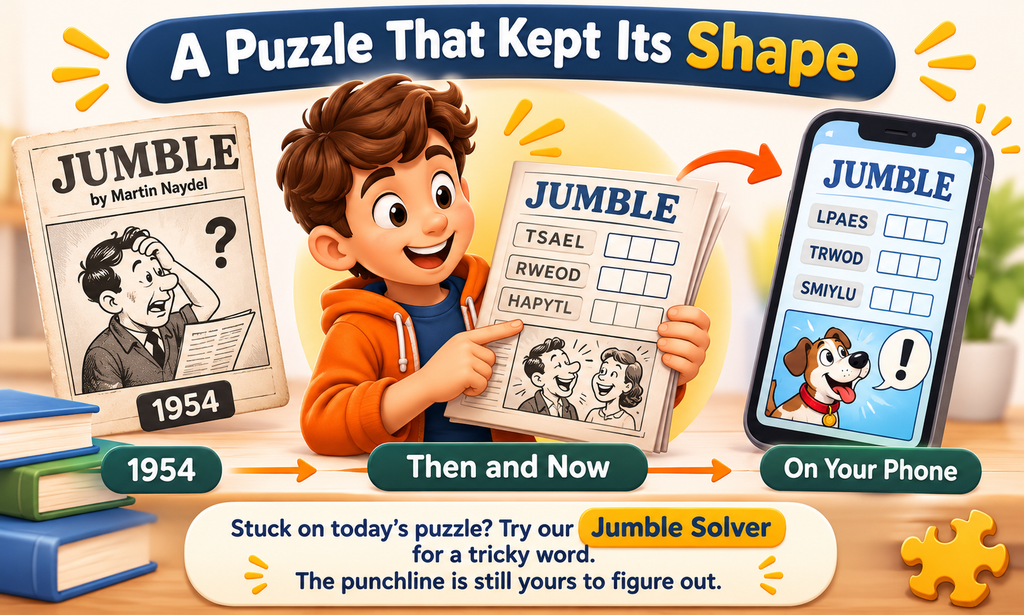
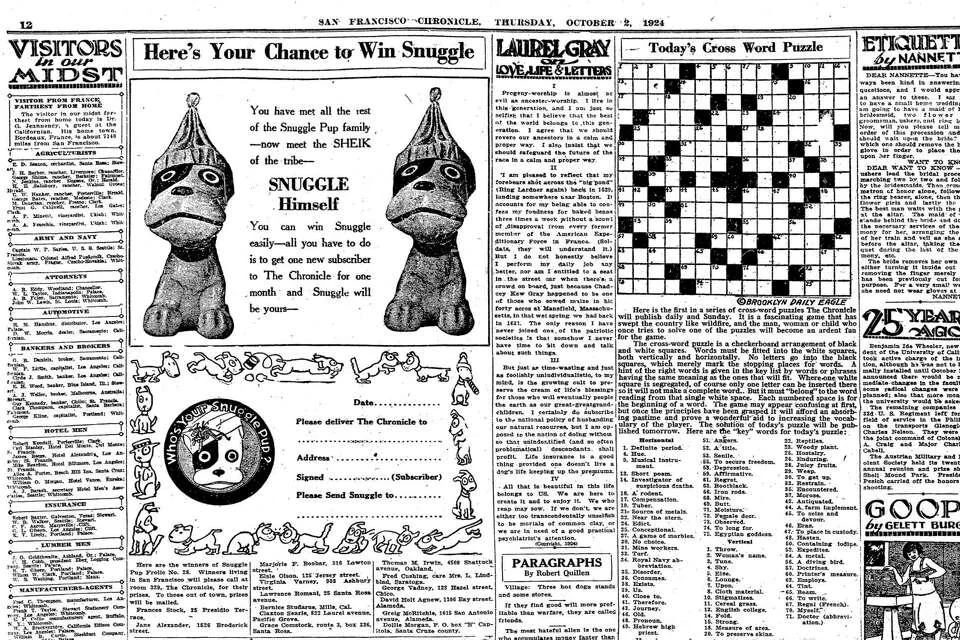
The history of Jumble goes back to 1954, when Martin Naydel introduced a newspaper puzzle called Scramble. The name changed later that year, but people kept coming back to the same idea: a few mixed-up words, a cartoon and a joke to figure out.
Henri Arnold and Bob Lee took over the puzzle in the early 1960s. Years later, David L. Hoyt and Jeff Knurek brought their own work to it. Tribune Content Agency now distributes Jumble through newspapers and digital platforms.What makes Jumble puzzle history worth revisiting is how the puzzle has changed over the decades without losing its familiar combination of words, cartoons and humor.
What Is Jumble? Understanding the Original Puzzle
Jumble gives you four scrambled words, and each solved word contributes letters to the final cartoon answer. The last step is where the wordplay comes in.
In short, you solve the words first, then use the circled letters and cartoon clue to uncover the final joke.
How Jumble Works
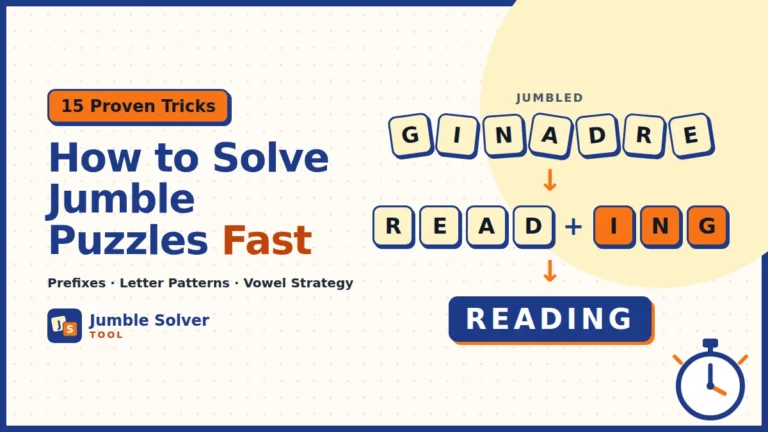
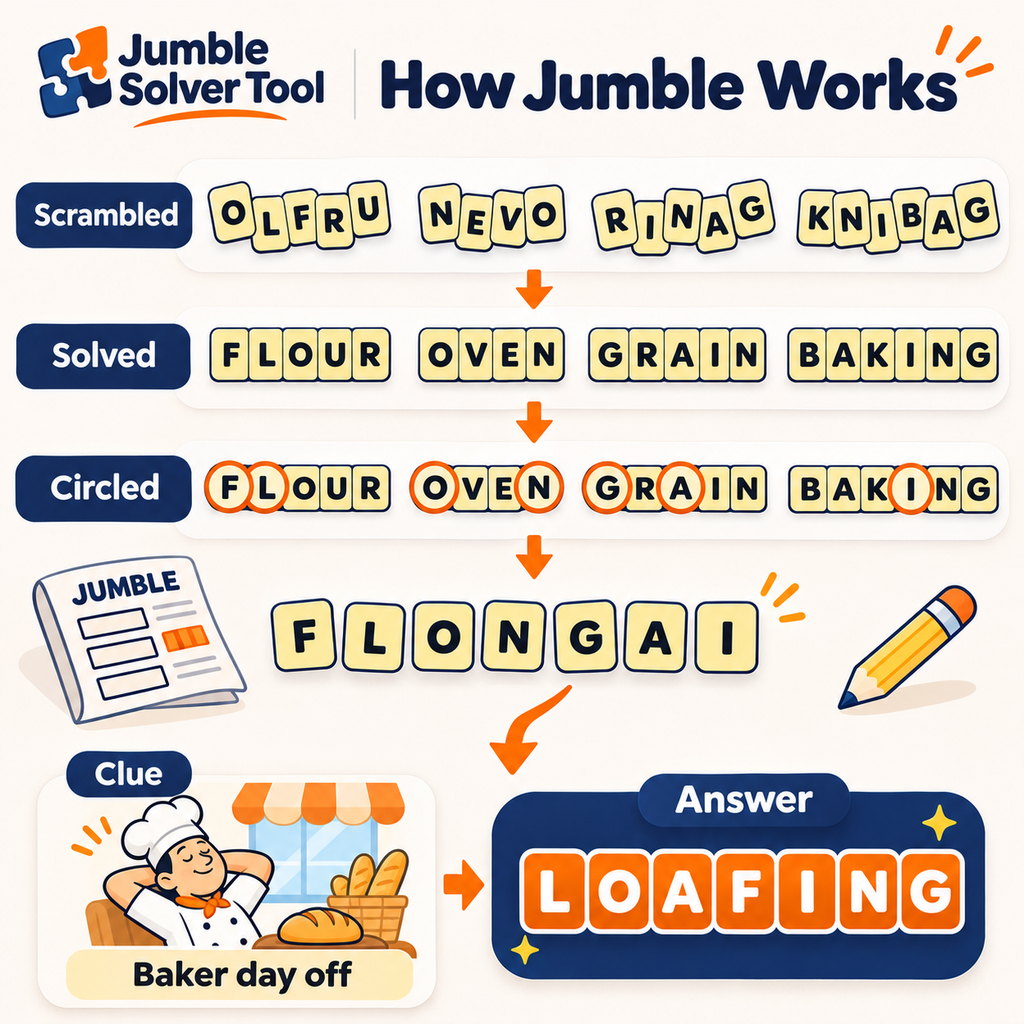
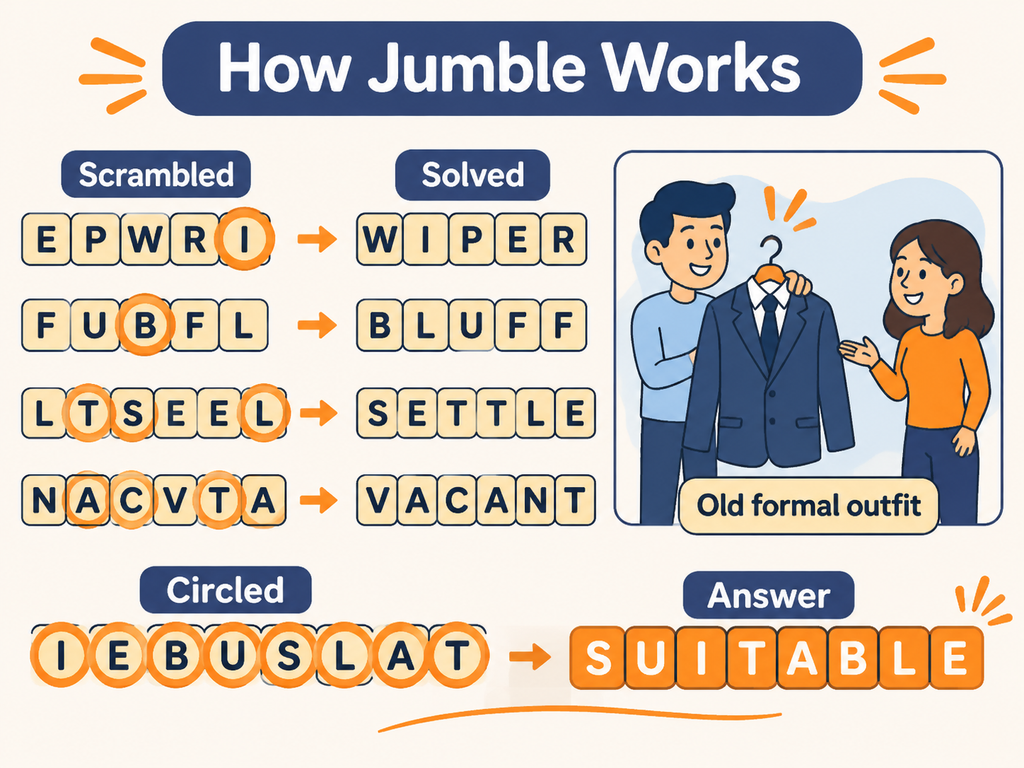
Jumble gives you four scrambled words to figure out. You rearrange their letters to find the correct words. Some letters are circled, and those are the ones you’ll need for the final answer. Put them together, rearrange them again, and you’ll uncover the punchline hidden in the cartoon.
Here’s a small example.
- OLFRU becomes FLOUR. Take F and L.
- NEVO becomes OVEN. Take O and N.
- RINAG becomes GRAIN. Take G and A.
- KNIBAG becomes BAKING. Take I.
Now mix those seven letters together: F, L, O, N, G, A and I. They spell LOAFING.
Imagine a baker who’s spent the whole night making bread. What does he do on his day off? LOAFING. It’s a little play on words: a loaf of bread and taking it easy. That’s the kind of joke Jumble is known for. Some puzzles also use homophones, where words sound alike but have different meanings or spellings.
The History of Jumble at a Glance: A Timeline
A few dates matter more than others. Jumble began as Scramble in 1954; the newspaper rollout and later name change were separate steps. One interesting detail is that Jumble’s story has three distinct stages: Naydel’s original puzzle, its development under later creators and its move into digital formats. Looking at these stages separately makes it easier to understand how the puzzle evolved without losing its original identity.
| Year | Milestone |
| 1954 | Martin Naydel creates Scramble; the Pittsburgh Post-Gazette carries it. |
| Late 1954 | Scramble becomes Jumble; the Spokane Chronicle documents the name. |
| 1955 | A. S. Barnes publishes Naydel’s puzzle collection. |
| Early 1960s | Henri Arnold and Bob Lee take over. |
| 1994 | Wink Martindale hosts Jumble on The Family Channel. |
| 2008 | Jeff Knurek takes over the cartoons. |
| 2011 | David L. Hoyt succeeds Mike Argirion as writer. |
| 2014 | Just Jumble launches during the 60th anniversary. |
| 2015 | Henri Arnold dies. |
| 2019 | Giant Jumble Crosswords is available as an app. |
| Today | Jumble appears in newspapers and online. |
The exact Arnold–Lee handover year varies across historical accounts; we’ll examine that separately.
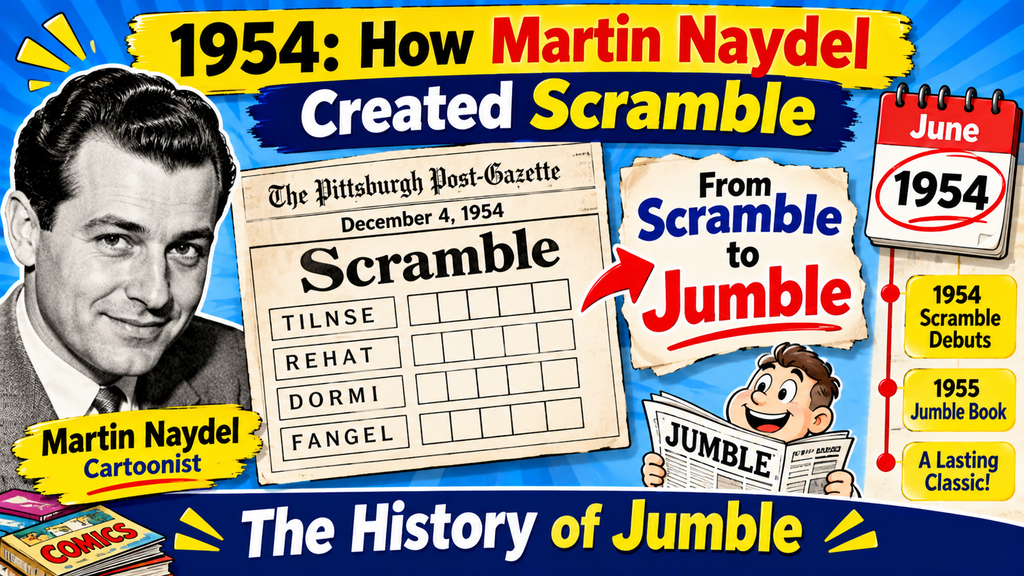
1954: How Martin Naydel Created Scramble
Who created Jumble? Cartoonist Martin Naydel did, in 1954. And when did Jumble start? It began that June as Scramble, before adopting the name readers know today.
Who Was Martin Naydel?
Naydel worked mainly in comic books. Born Martin Nadle, he signed some work “Martin Naydel” and later used “Martin Dell.” His brother, Larry Nadle, was also in comics, working as a writer and editor. Under the Dell name, Martin later introduced Comicode through the Martin Dell Syndicate.
From Scramble to Jumble
The origin of Jumble is documented in old newspaper pages. The Pittsburgh Post-Gazette carried Scramble on December 4, 1954, still bearing Naydel’s signature. A December 6 account from the Spokane Chronicle records the switch to Jumble, though the original clipping should be checked before quoting its wording.
In 1955, A. S. Barnes published Jumble: That Scrambled Word Game, a collection credited to Naydel. That early book shows the puzzle had moved beyond its daily newspaper slot. One name causes confusion: Martin Nodell helped create Green Lantern; Martin Naydel created Jumble. Keeping them separate matters when tracing the history of Jumble.
The Henri Arnold and Bob Lee Era: Cartoon Puns That Defined Jumble
Arnold and Lee Take Over
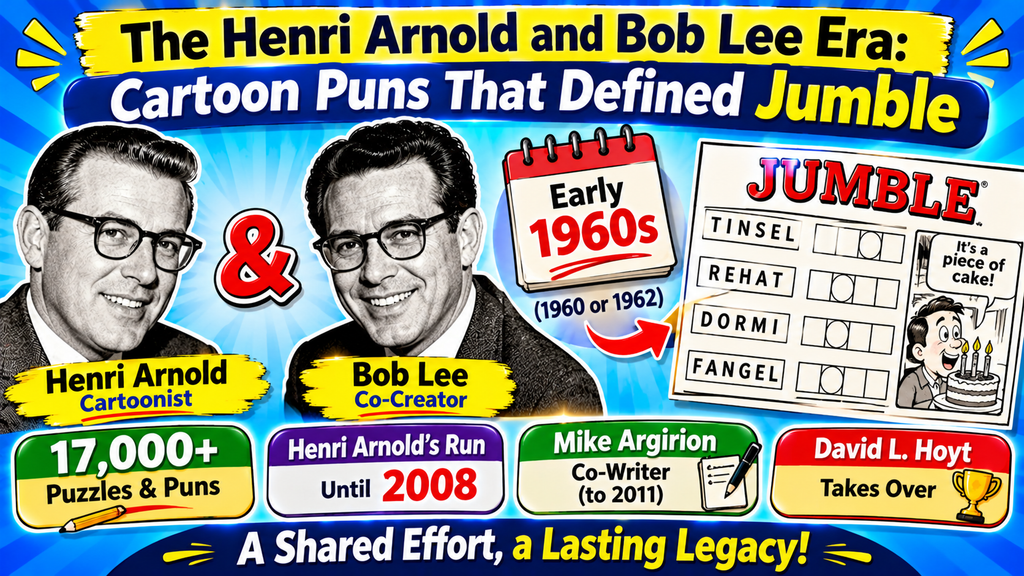
The handover from Martin Naydel happened in the early 1960s, but sources differ on the exact year. Rather than choosing one date, we have kept the period broad because the available historical accounts do not agree on the exact handover year. A National Cartoonists Society-linked account gives 1960; a 1993 interview with Arnold gives 1962. The safest answer is the early 1960s.
Henri Arnold became the familiar Jumble cartoonist, while Bob Lee shared the byline on the puzzles. Their work brought together anagrams, cartoon clues and punchlines, making the drawing part of the solving experience rather than just decoration.
The Writing and Cartoon Legacy
Arnold continued working on Jumble until 2008. Across his long run, he drew and later also created more than 17,000 puzzles and puns. He died on November 17, 2015, aged 97. Mike Argirion also appears in later Jumble credits with Arnold. His writing role continued until 2011, when David L. Hoyt took over. This era shaped the history of Jumble, but it was a shared effort, not the work of one cartoonist alone.
Jumble Beyond Newspapers: TV, Books and Modern Creators
Jumble TV Game Show 1994
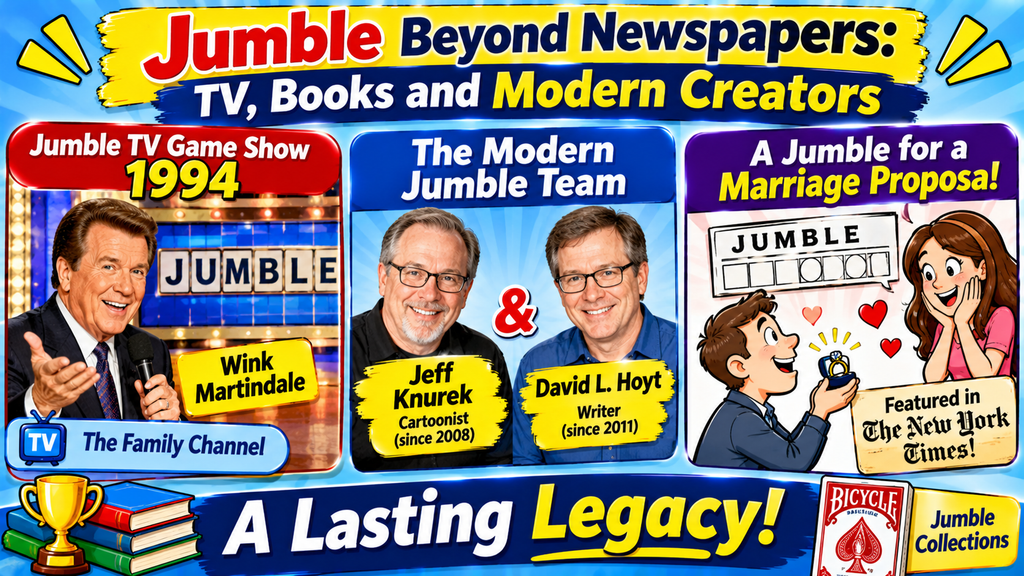
Jumble: The Interactive Game aired on The Family Channel in 1994. Wink Martindale hosted, Randy West announced, and Martindale and Bill Hillier created the show. Home viewers could also play along by phone, bringing the newspaper puzzle to television. Jumble collections and a Bicycle playing-card deck also carried the puzzle beyond newsprint.
The Modern Jumble Team
Jeff Knurek, Jumble cartoonist since 2008, took over the drawings from Henri Arnold. David L. Hoyt’s Jumble work began in 2011, when he replaced Mike Argirion as writer. Hoyt and Knurek now work together on the syndicated puzzle, pairing wordplay with cartoon clues.
In 2018, they created a custom Jumble for a reader who wanted to propose to his partner. The New York Times later featured the puzzle in its collection of notable wedding proposals. This is another chapter in the history of Jumble: the familiar puzzle found a place in a very personal moment.
From Newsprint to Phones: How Jumble Became a Daily Digital Habit
The digital side of the history of Jumble now includes online play. The official Jumble site directs readers who want to play Jumble online to a game hosted by the Chicago Tribune; USA Today also carries syndicated Jumble content. Tribune Content Agency offers digital Jumble to publishing partners. The familiar word-and-cartoon format remains, but players now tap or type instead of using a pencil.
Jumble Apps and Digital Products
The Jumble app history includes three milestones:
| Year | Digital release |
| 2009 | Jumble Madness for Nintendo DS |
| 2014 | Just Jumble launches on iOS; Android, Kindle and NOOK versions follow |
| 2019 | Giant Jumble Crosswords launches on the iOS App Store, Google Play and Amazon Appstore |
How Solver Tools Help Modern Players
Six distinct letters can be arranged in 720 ways, making a scramble such as KNIBAG easy to get stuck on. A Jumble solver checks the letters against a word list and shows possible words. It won’t solve the cartoon’s final joke, but it can help with one stubborn word so you can finish the puzzle yourself. We also tried a simple example using KNIBAG. Once the letters were entered, the solver helped identify BAKING, leaving the cartoon clue and final wordplay for the player to work out.
Stuck? Try our independent Jumble Solver Tool to check possible words
Common Myths and Why Jumble Has Lasted More Than 70 Years
Common Myths About Jumble
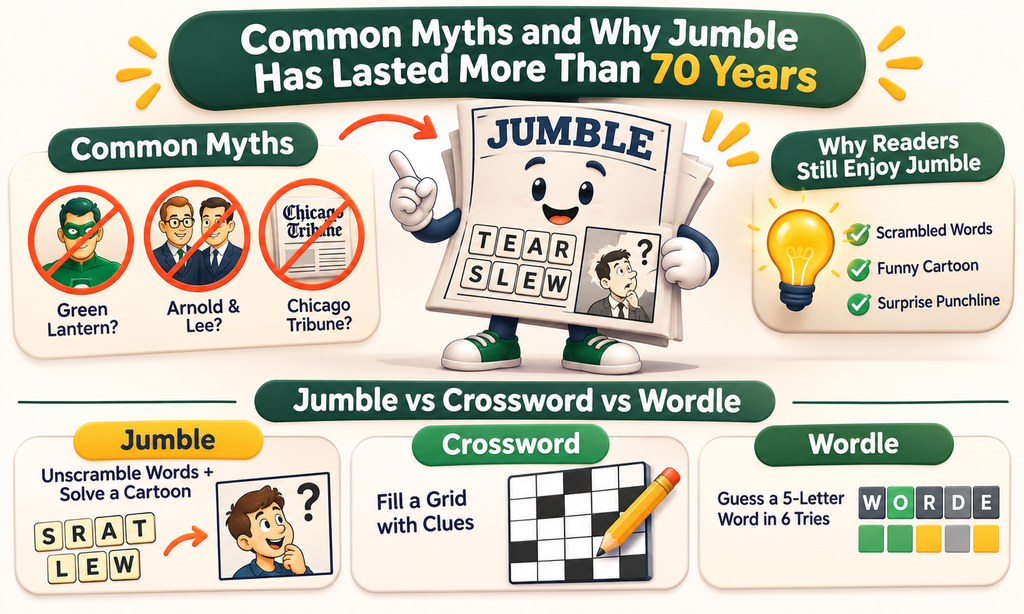
One error in Jumble newspaper puzzle history is confusing its creator with another cartoonist. Did Martin Naydel create Green Lantern? No. That was Martin Nodell, who helped create the superhero; Naydel created Jumble.
Did Henri Arnold and Bob Lee invent Jumble? No. They took over the puzzle after Naydel in the early 1960s. Did the Chicago Tribune create Jumble? No. Naydel introduced it as Scramble in 1954. Newspaper syndication later helped it reach readers beyond its original publication.
Why Readers Still Enjoy Jumble
Jumble pairs scrambled words with a cartoon and a punchline. Simple rules lead to a small surprise, whether you solve it in a newspaper or on a phone.
Jumble vs Crossword vs Wordle
| Puzzle | Main solving method |
| Jumble | Unscramble words and solve a cartoon riddle |
| Crossword | Fill a grid using clues |
| Wordle | Guess a hidden five-letter word in six tries |
The difference is in what each puzzle asks you to do. A crossword relies on clues and a grid, while Wordle limits players to six guesses. Jumble adds another step: solving the scrambled words before using the cartoon to find the final joke.
Frequently Asked Questions
A Puzzle That Kept Its Shape
The history of Jumble began with Martin Naydel’s newspaper puzzle in 1954 and now stretches to phone screens. The familiar mix of scrambled words, cartoons and humor remains, including that pun you see coming one second too late. Stuck on today’s puzzle? Try our Jumble Solver for a tricky word. The punchline is still yours to figure out.
Sources and Historical Research
This article draws on historical newspaper records, creator biographies, publisher information and original app announcements. We used these sources to distinguish Jumble’s original 1954 appearance from its later newspaper distribution, creator changes and digital releases.